A Groundbreaking That Signals More Than Construction
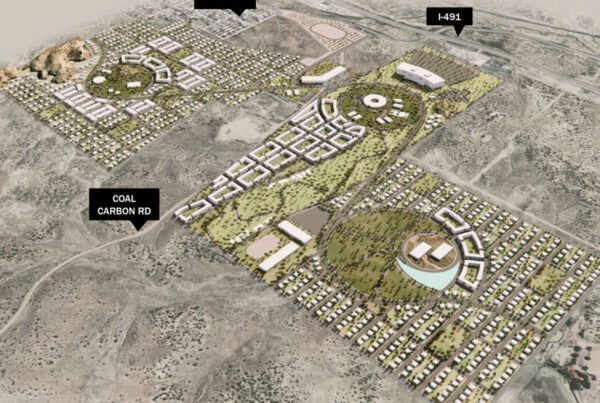
On July 31, a bulldozer turned dirt on 160 acres in Newcastle, Oklahoma. Not for a strip mall. Not for a casino expansion. For what will become one of the most comprehensive First American healthcare campuses in the United States.
The Chickasaw Nation Health Newcastle Medical Center carries a $1 billion development budget for its first phase alone. Twelve buildings. Up to 2.5 million square feet at full buildout. Fifty inpatient beds in phase one, scaling to 140 across the complete campus. More than 5,500 permanent jobs once operational. A patient population exceeding 100,000 Native citizens in the greater Oklahoma City region.
What makes this relevant to investment groups watching tribal healthcare isn't only the scale. It's the structure.
The Joint Venture Mechanism
The Chickasaw Nation is financing the design and construction of the facility entirely. The Indian Health Service commits to funding staffing and operational costs once the campus opens, locked in under a 20-year Joint Venture Agreement. This division of capital responsibility isn't a one-off arrangement. It's a federal program, authorized under Section 818 of the Indian Health Care Improvement Act, that enables tribal nations to build facilities using their own and external capital, then lease those facilities to the IHS at no cost in exchange for long-term operational commitments from the federal government.
Selected for the Joint Venture Program in 2020, the Chickasaw Nation and IHS signed the formal 20-year agreement in late 2024. The tribe won legislative approval for the $1 billion phase-one budget in June 2026. Dirt turned six weeks later.
Ownership and governance of the physical campus remain with the tribal nation. The federal partner provides operational continuity. For development-oriented organizations analyzing tribal healthcare as a long-term asset class, that federal backstop on staffing and operations changes the risk calculus entirely.
What Phase One Actually Contains
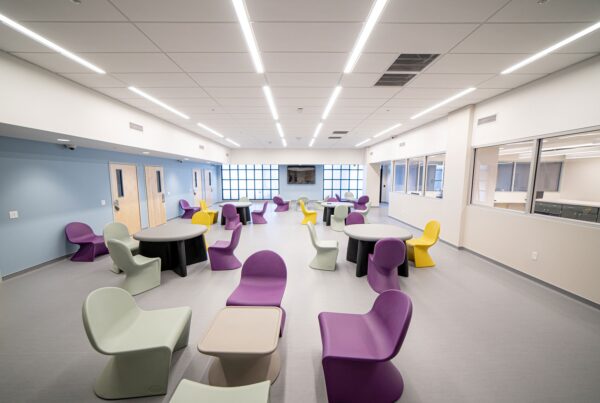
The first 700,000 square feet will include a 50-bed hospital, emergency department, surgical suites, labor and delivery services, pediatrics, behavioral health services, dental clinics, a pharmacy, and dedicated research space. The campus is also designed to host physician residency programs and the nation's first Native American-owned and operated medical research center.
That last element is worth noting. This facility isn't being built to address a gap and stop. It is being built as a permanent institutional anchor in a region where Native adults carry some of the highest chronic disease burdens in the country.
City officials in Newcastle have estimated that the first phase could take fewer than four years to complete, with 600 to 800 construction workers on site throughout the build. The full campus may take a decade or longer to reach final scale.
The Broader Investment Context
The Newcastle groundbreaking is the most visible recent example of a pattern that has been building for months. The FY 2026 federal budget directed $8.1 billion to the Indian Health Service. IHS allocated $700 million in Infrastructure Investment and Jobs Act funding specifically to tribal drinking water and sanitation projects. Congress funded the Special Diabetes Program for Indians at $200 million, the highest level in the program's history, with the Navajo Area receiving approximately $17.6 million of that allocation.
On August 21, HHS named Mark Cruz as the 12th Director of the Indian Health Service. His appointment brings leadership stability to an agency that had operated under a near-30% staffing vacancy rate, with more than 600 IHS facilities absorbing the strain. Cruz will also continue serving as Senior Advisor to HHS Secretary Kennedy, a dual role that signals coordinated attention to Indian Country priorities at the departmental level.
The capital signals point in one direction. Federal posture toward large-scale, tribally led infrastructure builds is more favorable in 2026 than at any point in recent memory.
What the Joint Venture Model Actually Offers Development Partners
The IHS Joint Venture Program doesn't require tribes to operate in isolation. It creates structured conditions for partnership. External investors, real estate development firms, and strategic capital partners willing to engage on tribal terms, with the patience federal timelines demand and with genuine respect for sovereign governance structures, can find meaningful roles in this ecosystem.
The Newcastle project demonstrates the coordination required. Chickasaw Nation leadership, IHS resources, municipal infrastructure planning by Newcastle city officials, and private design and construction expertise are operating in parallel toward a shared outcome. That layered coordination model is the playbook.
For firms like Gleaming Cube, whose investment thesis centers on behavioral health and medical infrastructure, the IHS Joint Venture framework represents a replicable structure worth tracking. Behavioral health services are explicitly included in the Newcastle phase-one program. The Navajo Area Health Services Master Plan, launched in April 2026, is advancing planning for the Gallup Indian Medical Center replacement, expected to rank among the largest tribal hospital campuses in the country upon completion.
These aren't isolated projects. They are a wave.